A left chest logo is usually about 3 to 4 inches wide, with its center roughly 7 to 9 inches below the shoulder seam and about 3 to 4 inches from the center of the shirt. Those numbers are a starting point rather than a law, and they shift a little with garment size and style.
If you are ordering embroidered shirts for a team, a shop or a brand, getting left chest logo size and placement right matters more than most people expect. A logo that is too big looks like a billboard, and one that is too low looks like a mistake. This guide covers the usual ranges and how to check them on your own garments.
The short version: aim for 3 to 4 inches wide on adult shirts, keep the height at roughly 2 to 3 inches, and sit the logo on the wearer left side, level with the top of the placket on a polo.
What is the standard left chest logo size?
There is no single official standard, but most embroiderers and decorators land in the same range. For adult garments, 3 to 4 inches wide is the common answer. Height depends on the shape of the logo, and 2 to 3 inches is typical for a horizontal mark.
Left chest logo size chart
These are the typical ranges most decorators work with. Use them as a starting point and check them on the actual garment.
| Garment | Typical logo width | Typical height | Placement |
|---|---|---|---|
| Adult polo or T-shirt | 3–4 in (76–102 mm) | 2–3 in (51–76 mm) | Center about 7–9 in below the shoulder seam and 3–4 in from the center line |
| Kids (youth) shirt | 2.5–3.5 in (64–89 mm) | In proportion to the width | Scaled to the smaller chest; check it on the garment |
| Hoodie or zip jacket | 3–4 in (76–102 mm) | 2–3 in (51–76 mm) | A little lower than on a tee, clear of the zip, hood and pocket |
Sources do not agree on exact figures, especially for kids sizes, so treat these as ranges. If your garment supplier or customer has a spec sheet, that wins. Putting the same logo on caps too? Cap sizes work differently, so see the size table in our cap and hat logo digitizing guide.
Small logos and small text: keep lettering at least about 0.25 in (6 mm) tall and avoid hairline details. Below that, letters tend to fill in and become hard to read.
- Very large or very small garments: many decorators adjust by about half an inch per size step.
- Fitted ladies tops: the chest is narrower, so many decorators stay at the smaller end of the adult range.
Where should a left chest logo be placed?
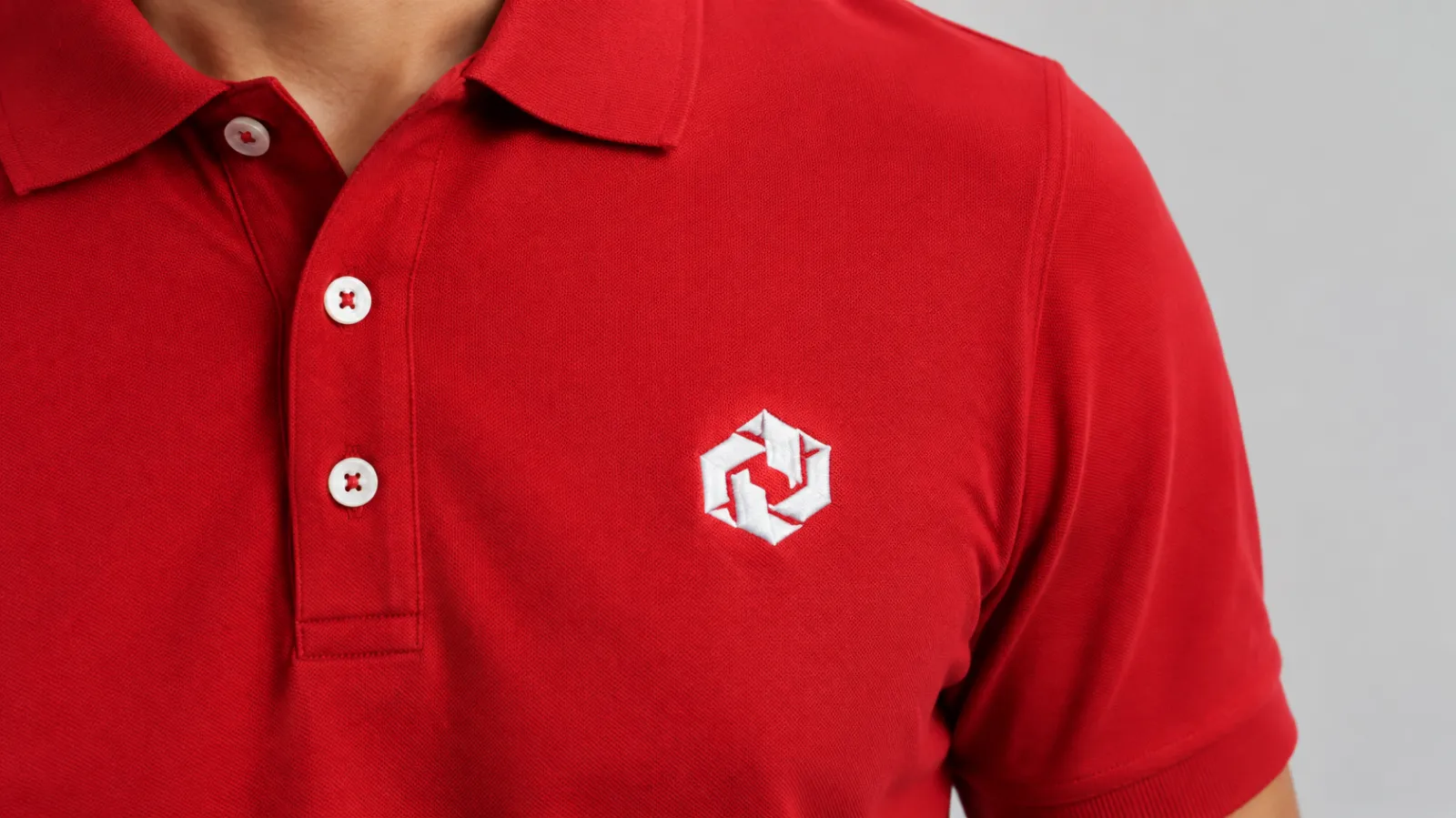
Think of two measurements: how far down from the shoulder seam, and how far across from the center of the garment. For a typical adult polo or tee, the center of the logo often sits about 7 to 9 inches below the shoulder seam, where the shoulder meets the collar, and about 3 to 4 inches from the center line or placket.
Some guides place the logo higher or closer to the center, so always check against the garment. The logo should sit on the flat part of the chest, below the collar and clear of the armhole seam. On a polo, lining it up beside the placket usually looks natural.
Left chest logo placement on hoodies, tees and jackets
Different garments need small adjustments. A hoodie has a hood, a zip or a pocket line to work around, so the logo often sits a little lower and further from the zip than it would on a polo. Check it with the hood down and the garment worn, not just laid flat.
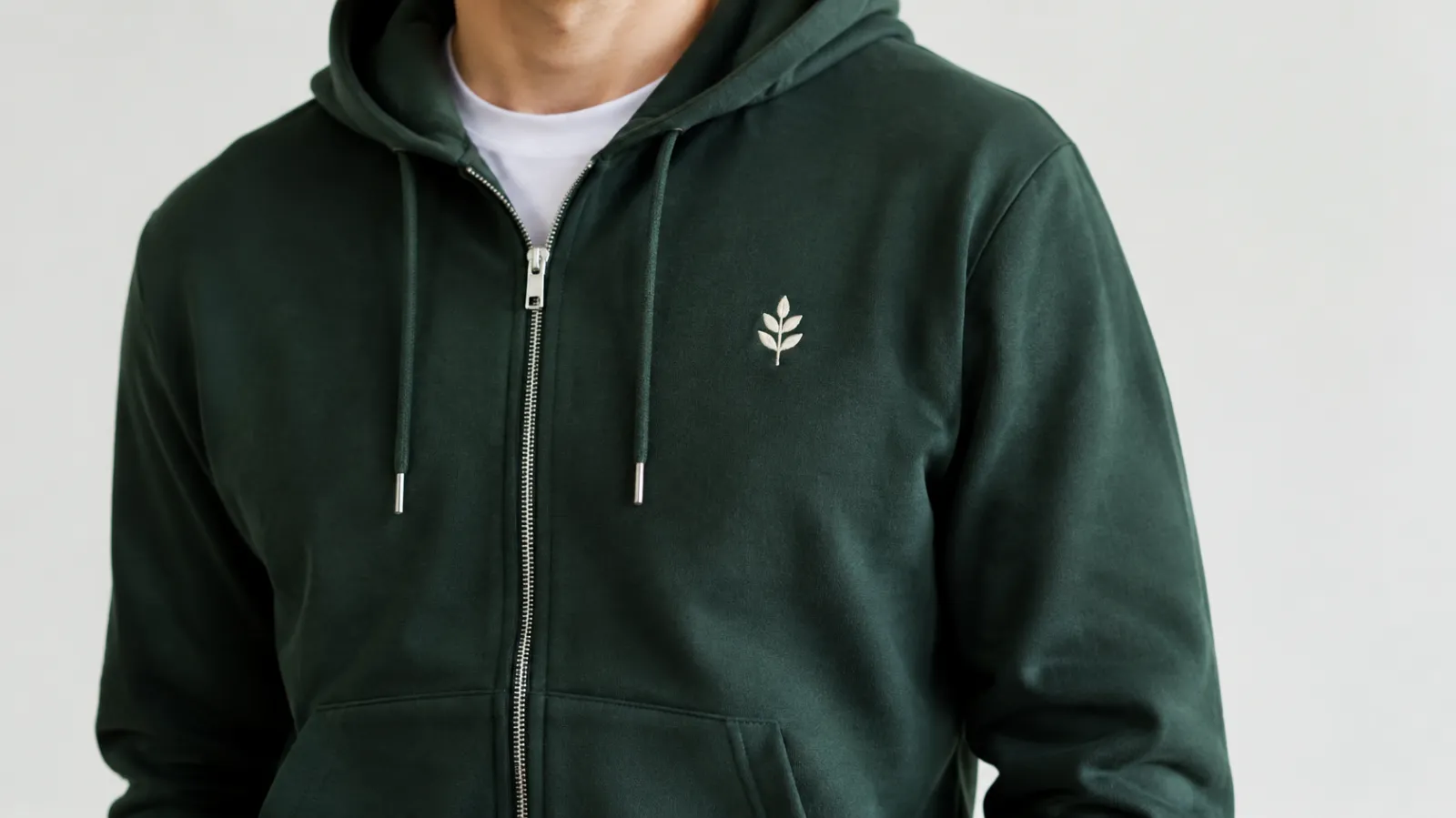
On a plain tee there is no placket to guide you, so people often measure down from the shoulder seam and across from the center of the neckline. On a jacket, remember that layering can hide part of the logo, so a simple, bold design works better than a detailed one.
How do you check placement before you sew?
- Lay the garment flat and measure from the shoulder seam and the center line, then mark the spot.
- Print the logo at actual size on paper, tape it to the garment and look at it in a mirror, or on a person.
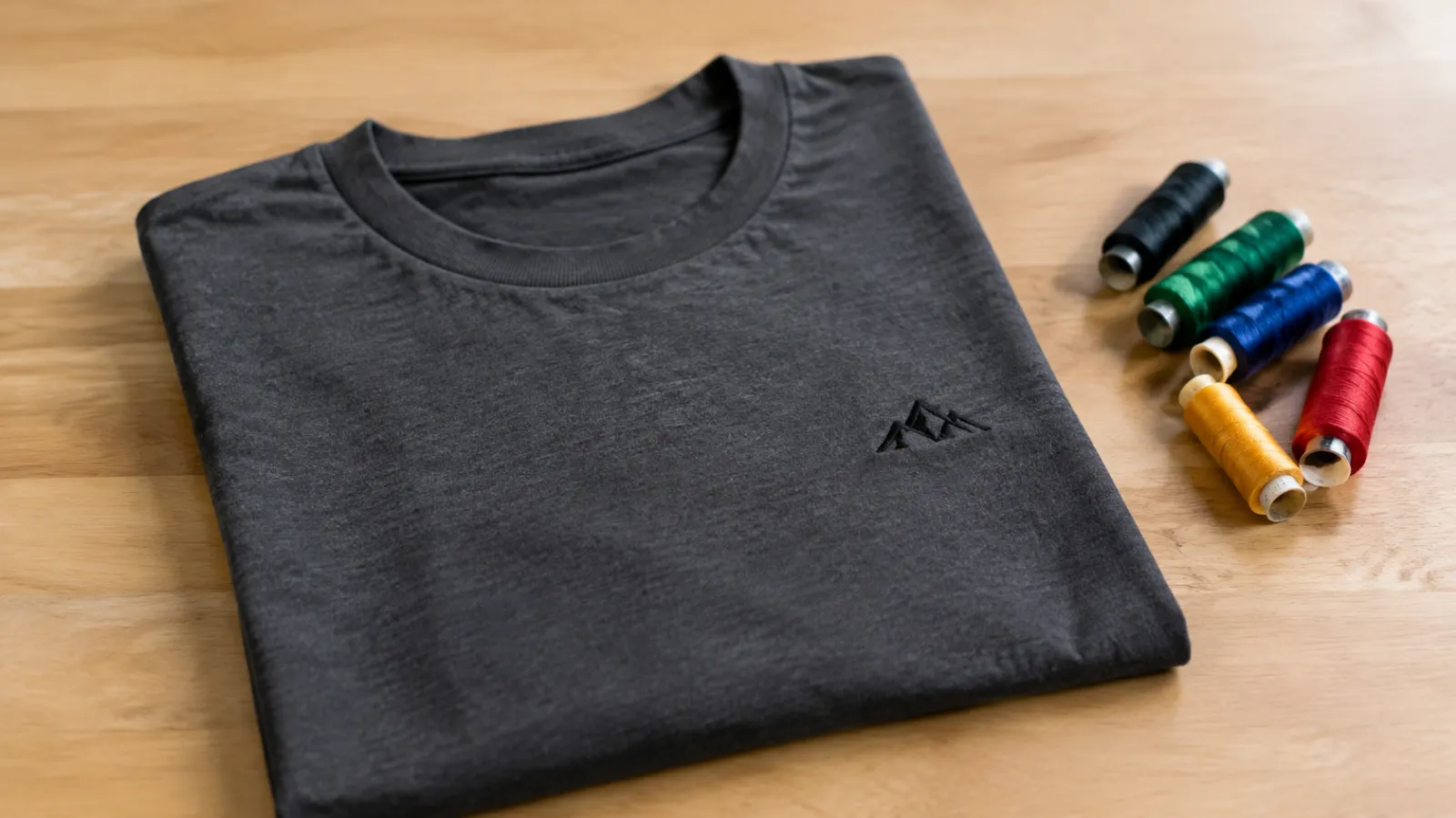
- Fold the garment as a customer would see it in a shop and check the logo still reads.
- Sew a test on one garment before running a full order.
Common left chest logo mistakes
- Making the logo too wide. Past about 4 inches it starts to crowd the shoulder and armhole on smaller sizes.
- Using one size for every garment. A design that suits an adult large can swamp a kids small.
- Placing it too close to the collar or the placket, where thick seams distort the stitches.
- Putting fine text in a small logo. Very small letters can fill in and become hard to read, so many digitizers suggest keeping lettering at a sensible minimum height.
- Sewing without a test. Fabric stretch and hooping can shift the position by a few millimeters.
How does size affect the digitizing?
Size and stitching go together. A logo shrunk to fit the left chest usually needs its details simplified, thin lines widened and tiny shapes removed, so it still sews cleanly. That is a digitizing job, not just a resize. Take the logo you want on the chest, tell us the garment and the width you need, and we digitize it for that size.
Left chest logos fall under our under 5 inch digitizing tier, which runs from $4.99 to $9.99 with delivery in 12 to 24 hours and free edits. Send your artwork through the quote form and we will confirm the details by email.
Frequently asked questions
What is the standard left chest logo size?
Most adult left chest logos are about 3 to 4 inches wide. There is no official rule, so check any spec sheet from your garment supplier or customer.
How far below the collar should a left chest logo sit?
On a polo or tee, the center of the logo often sits about 7 to 9 inches below the shoulder seam. Check it on the actual garment, because styles and sizes vary.
Is a left chest logo on the left or right?
It goes on the wearer left side, which is the right side as you look at someone facing you.
Should kids (youth) shirts get a smaller logo?
Usually yes. Many decorators scale logos for kids sizes down to roughly 2.5 to 3.5 inches wide, so the design does not overpower the garment.
Do I need a different file for a smaller logo?
Often yes. A design shrunk to left chest size usually needs simpler detail and wider lines so it sews cleanly, which means digitizing it for that size.
By Abdul Rafay · Digitize’NStitch ·