The right embroidery stabilizer depends mostly on the fabric. Cut-away is the safe choice for stretchy fabrics like T-shirts, polos and hoodies, while tear-away works on stable woven fabrics like canvas and denim. Wash-away is used on top of towels and fleece, or for lace.
Stabilizer is the layer that holds the fabric steady while thousands of stitches go in. Choose the wrong one and you get puckering, gaps around the outline or a design that looks stretched out after a wash. This guide shows how to pick the right embroidery stabilizer and what it means for your artwork.
The short version: stretchy fabric or a dense design means cut-away. Stable woven fabric and a light design means tear-away. Fluffy fabric needs a wash-away topping on top. When in doubt, go heavier, not lighter.
What does embroidery stabilizer actually do?
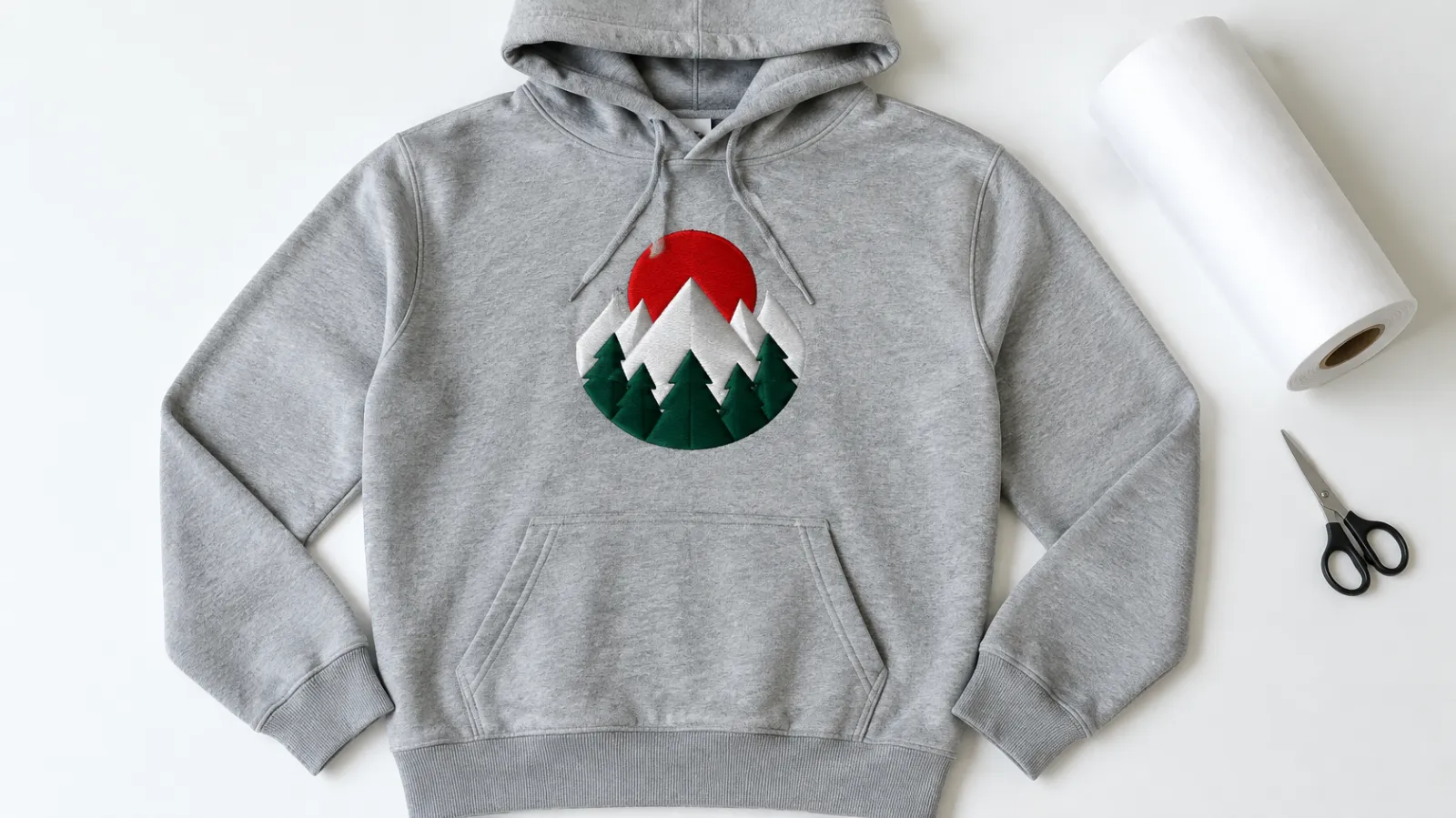
Fabric moves. It stretches, shifts and gets pulled toward the needle. A stabilizer, sometimes called backing, is placed under the fabric so the stitches have something firm to sit in. Without it, outlines miss their fills and letters lose their shape.
There are three main types you will hear about: cut-away, tear-away and wash-away. They differ in what happens to them after the design is sewn.
When should you use cut-away stabilizer?
Use cut-away on anything that stretches. That includes knit T-shirts, polos, hoodies and fleece. Cut-away stays in the garment permanently and keeps supporting the stitches through wearing and washing. After sewing, the excess is trimmed close to the design, usually leaving about half an inch around it.
It is also the better choice for dense designs, such as a full-color logo or a solid fill, because the design pulls hard on the fabric. For light-colored or thin shirts, a no-show mesh version is often used so the backing does not show through.
When is tear-away stabilizer enough?
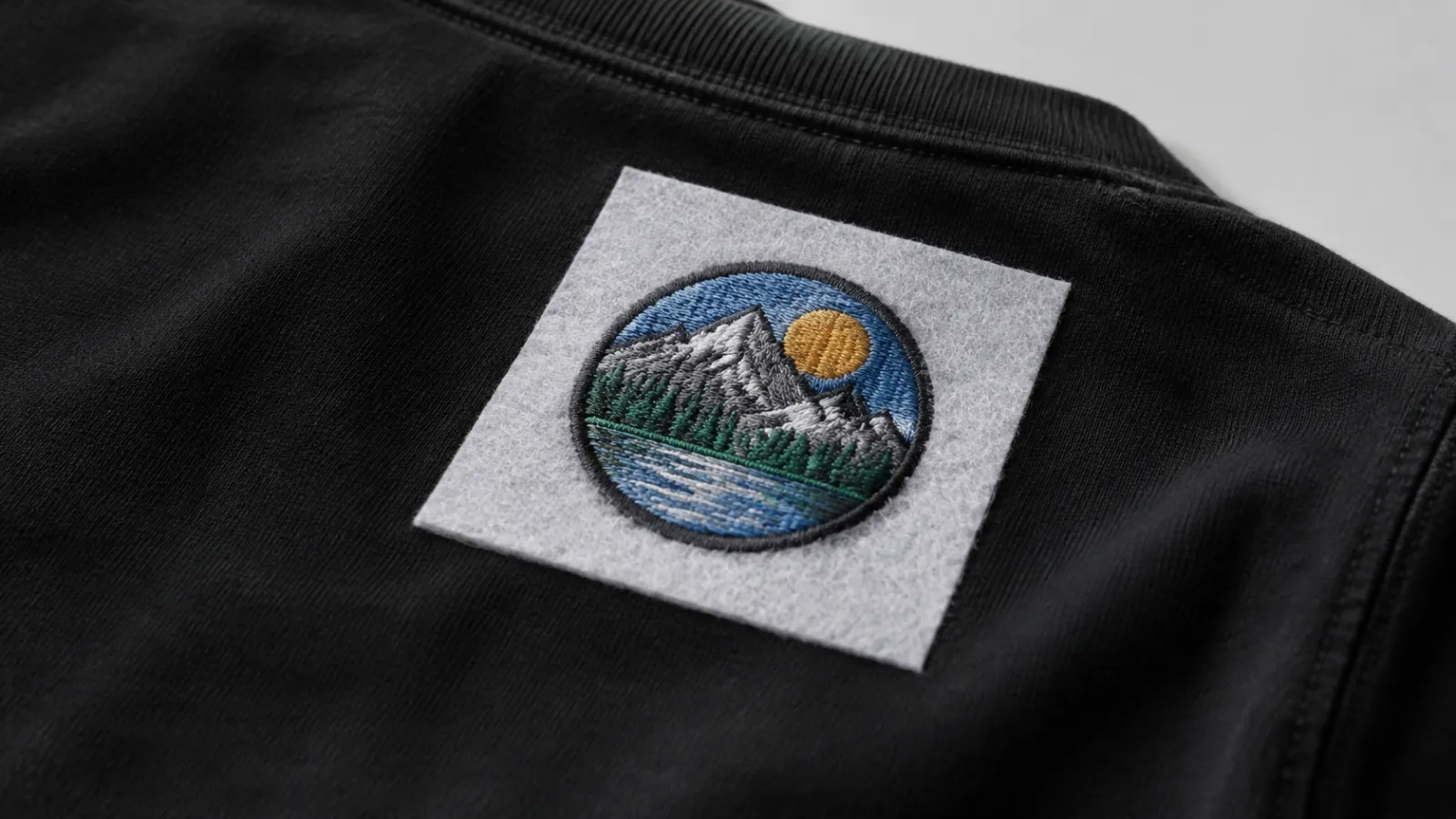
Tear-away suits stable woven fabrics, such as canvas, denim, twill and many bags. After sewing you tear the backing away from around the design by hand, which makes it quick and clean to remove.
The trade-off is that tearing pulls on the stitches. On a dense or very small design it can loosen them, and on stretchy fabric it simply does not give enough support. Heavier jobs sometimes use two layers. If a design is going on a knit, tear-away is usually the wrong pick.
What is wash-away stabilizer used for?
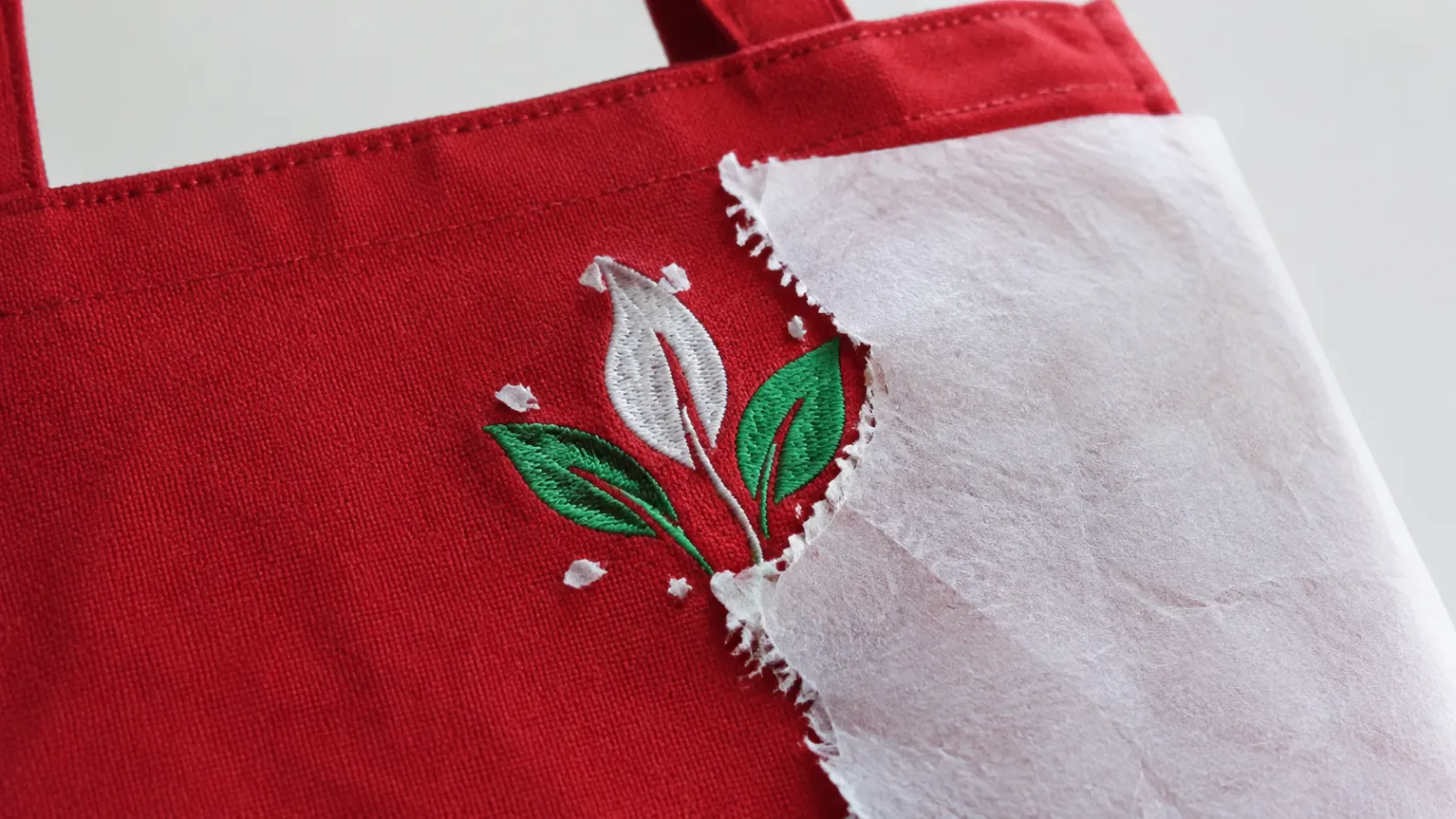
Wash-away, or water-soluble, stabilizer dissolves in water. It has two common uses. The first is as a topping on towels, fleece and other textured fabrics, where it stops the stitches from sinking into the pile. The second is for freestanding lace, where the whole design is stitched on the stabilizer and the stabilizer is rinsed away afterward.
On its own it does not support a design on a shirt. Most of the time it goes on top of the fabric while a cut-away or tear-away goes underneath.
Which stabilizer for which fabric?
- T-shirts, polos, hoodies and other knits: cut-away, or no-show mesh for light colors.
- Canvas, denim, twill and tote bags: tear-away, or cut-away if the design is dense.
- Towels, fleece and other piles: a backing underneath plus a wash-away topping.
- Caps: usually a firm backing chosen by the person sewing. Our cap guide covers the digitizing side.
- Lace and freestanding designs: wash-away on its own.
Common embroidery stabilizer mistakes
- Using tear-away on stretchy knits. The fabric keeps moving and the outline drifts away from the fill.
- Choosing a stabilizer that is too light for a dense design. Puckering around the edge is the usual sign.
- Skipping the topping on towels or fleece, so small text sinks into the pile.
- Tearing away too aggressively and pulling stitches loose.
- Hooping too loosely or too tightly. The fabric should sit flat without being stretched.
Does the stabilizer change how a design is digitized?
Yes. Stitch density, underlay and pull compensation are all set with the fabric and backing in mind. A design digitized for a firm canvas tote can be too dense for a soft knit, and a design for a thin polo may need more underlay than a cap front does.
The stabilizer itself is chosen where the garment is sewn, but your digitizer needs to know what is being sewn on. That is why a clear note about the garment and fabric matters.
We digitize logos and artwork for embroidery. Digitizing under 5 inches is $4.99 to $9.99, 5 to 7 inches is $9.99 to $14.99, and larger designs are on quote, with free edits. Send your artwork through the quote form and mention the garment and fabric, so the file is built for what it will be sewn on.
Frequently asked questions
What is the difference between cut-away and tear-away stabilizer?
Cut-away stays in the garment and is trimmed around the design, so it keeps supporting stretchy fabric. Tear-away is torn off by hand after sewing and suits stable woven fabric.
Which stabilizer is best for T-shirts and polos?
Cut-away is the usual choice for knit T-shirts and polos. On light colors a no-show mesh cut-away is often used so the backing does not show through.
Can I use tear-away on stretchy fabric?
It is usually not a good idea. Tear-away gives little support on knits, so outlines can drift and the design can pucker.
Do I need stabilizer for every embroidery design?
Almost always. Even a light design on a stable fabric normally gets some backing so the fabric does not shift while it is stitched.
Does the type of stabilizer affect the embroidery file?
Yes, indirectly. Density and underlay are set for the fabric and backing, so it helps to tell your digitizer what garment the design is going on.
By Abdul Rafay · Digitize’NStitch ·